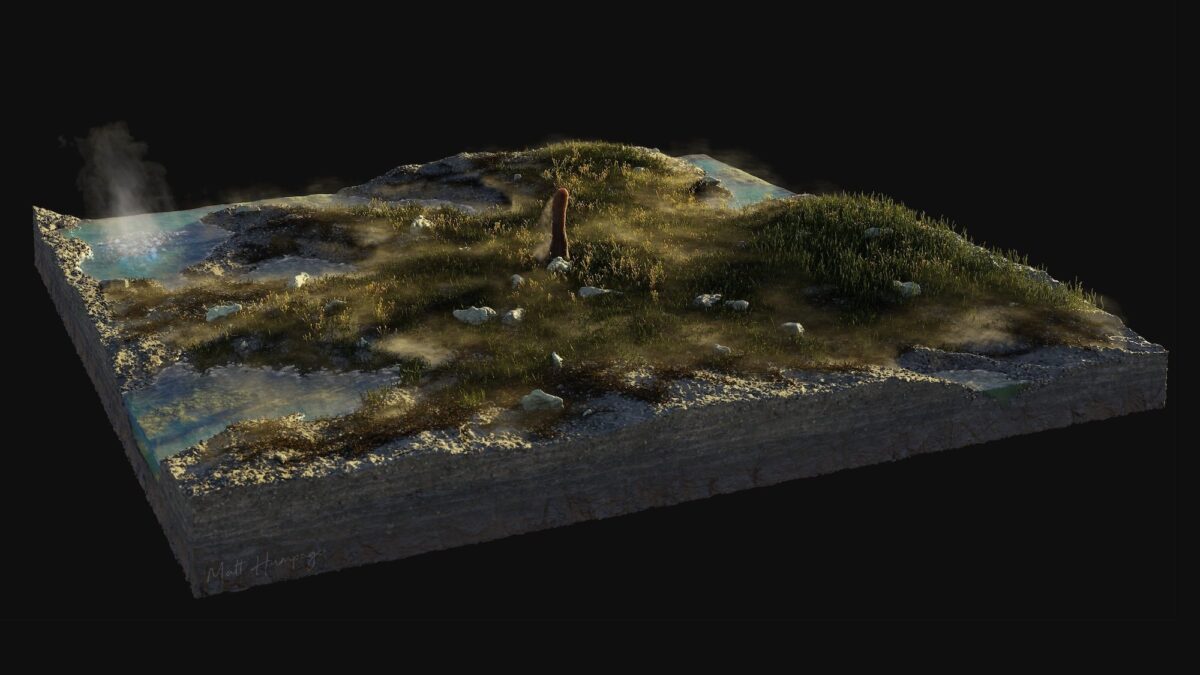
Шинжлэх ухааны маргаан дагуулсан энэхүү олдвор нь мөөгний төрөлд хамаардаггүй, бүрэн устаж үгүй болсон цогц амьд биетийн удам болох нь батлагдлаа.
Эдинбургийн их сургууль болон Шотландын үндэсний музейн судлаачид 407 сая жилийн настай “Rhynie chert” олдворын бүсээс олдсон Prototaxites taiti хэмээх аварга том биетийг судалжээ. Силури болон Девоны галавын үед буюу 420-370 сая жилийн өмнө амьдарч байсан энэ биет нь 8 метр хүртэл урттай байсан нь тухайн үеийн хуурай газрын хамгийн том организмуудын нэг байсныг харуулж байна. Энэхүү олдвор нь 165 жилийн турш үргэлжилсэн, түүнийг мөөг мөн эсэх талаарх эрдэмтдийн мэтгэлцээнд цэг тавьж байна.
Судлаачид орчин үеийн дэвшилтэт технологи болон химийн шинжилгээний аргуудыг ашиглан уг биетийн дотоод бүтцийг нарийвчлан шинжилжээ. Микроскопын шинжилгээгээр уг олдвор нь мөөгний биологид огт байхгүй, нарийн төвөгтэй гурван төрлийн хоолой бүхий бүтэцтэй болохыг илрүүлсэн байна. Мөн химийн шинжилгээгээр мөөгний эсийн хананд агуулагддаг хитин болон зарим төрлийн пигментийн нэгдэл болох перилен илрээгүй нь түүнийг мөөгний бүлэгт хамааруулах боломжгүйг нотолжээ.
Энэхүү судалгааны үр дүнд Prototaxites нь өнөө үед ямар ч ижил төстэй амьд биет үлдээгүй, тусдаа хувьслын замналаар хөгжсөн, бүрэн устаж үгүй болсон цогц амьд биетийн төрөл болох нь тодорхой боллоо. Энэ олдвор нь мод ургахаас өмнөх эртний экосистемд амьд биетүүд хэрхэн хөгжиж, хуурай газрыг эзлэн авч байсныг ойлгоход чухал ач холбогдолтой юм. Судалгааны багийнхан цаашид тус музейд хадгалагдаж буй бусад материалуудтай харьцуулан судалснаар энэ эртний биетийн талаар илүү тодорхой мэдээлэл цуглуулахаар төлөвлөж байна.
Дэлгэрэнгүйг эх сурвалжаас харах
↓Эх сурвалжийг нээх ↓
A giant organism that dominated Earth’s landscapes before trees evolved may not have been a fungus. New research suggests that Prototaxites belonged to an entirely extinct lineage of complex life, reshaping a scientific debate that has continued for more than 165 years.
The mysterious organism appeared during the Late Silurian and Devonian periods, between about 420 and 370 million years ago. Fossils show that some specimens reached up to 8 meters (26 feet) in length, making Prototaxites the largest known organism on land during part of Earth’s early terrestrial history.
Its unusual size and structure have made it one of paleontology’s most debated fossils. Scientists have long questioned whether it was a giant fungus or a member of another group of ancient organisms that no longer exists.
A Giant Organism From Earth’s Earliest Landscapes
Prototaxites was one of the first large organisms to establish itself on land, appearing before forests and trees transformed terrestrial environments. Its column-shaped fossils have been found in ancient ecosystems where it appears to have played an ecological role during the expansion of life across continents.
The researchers from the University of Edinburgh and National Museums Scotland stated that the organism was widespread in early terrestrial environments and was consumed by arthropods, showing that it interacted with other forms of life during the Silurian and Devonian periods. A study recently published in Science Advances focused on Prototaxites taiti, a species preserved in exceptional detail within the 407-million-year-old Rhynie chert in Aberdeenshire, Scotland. In a statement, study first author Corentin Loron explained that:
“The Rhynie chert is incredible. It is one of the world’s oldest fossilised terrestrial ecosystems and because of the quality of preservation and the diversity of its organisms, we can pioneer novel approaches such as machine learning on fossil molecular data,” adding that, “there is a lot of other material from the Rhynie chert already in museum collections for comparative studies, which can add important context to scientific results.”
The exceptional preservation of the Rhynie chert allowed scientists to study the fossil using methods that were not available to earlier researchers. The analysis combined detailed anatomical observations with chemical investigations to better understand the organism’s true identity.
Ancient Fossil May Not Be a Fungus
The research team studied a new specimen of Prototaxites taiti, which represents the largest known example of the species from the Rhynie chert site. Microscopic examination revealed an internal structure unlike any known fungal organism. The fossil contains three different types of tubular structures.
Among them are large, thick-walled tubes with annular banding and dense spherical regions called medullary spots. These medullary spots contain complex three-dimensional networks of interconnected tubes. According to the authors, this branching arrangement has no equivalent in fungal biology, making it difficult to place Prototaxites within any known fungal group.

The researchers compared the fossil’s structure with fossil fungi preserved in the same rock. The differences observed in the organization of its internal tissues provided further evidence that the organism followed a separate evolutionary path.
“It’s really exciting to make a major step forward in the debate over Prototaxites, which has been going on for around 165 years,” said Dr. Sandy Hetherington, senior author of the study.
Chemical analysis supports an extinct evolutionary lineage
The scientists also investigated the fossil’s molecular characteristics using infrared spectroscopy and machine-learning-based classification. They compared the chemical fingerprint of Prototaxites with fossil fungi, arthropods, plants and bacteria from the Rhynie chert. The paper reported that the fossil fungi from the same site preserve chemical signals linked to chitin-rich cell walls, but these signals were not found in Prototaxites.
The team also searched for perylene, a biomarker associated with pigment compounds produced by certain fungi. This compound had previously been identified in other Rhynie chert fossils, but it was absent from the analyzed Prototaxites samples.
“Our study, combining analyzing the chemistry and anatomy of this fossil, demonstrates that Prototaxites cannot be placed within the fungal group,” said Laura Cooper, a co-author of the research.

The study team concluded that Prototaxites belonged to a separate and completely extinct lineage of complex life. The organism represents a unique evolutionary experiment in producing large terrestrial forms, preserved only through rare fossils from Earth’s distant past.
Enjoyed this article? Subscribe to our free newsletter for engaging stories, exclusive content, and the latest news.


