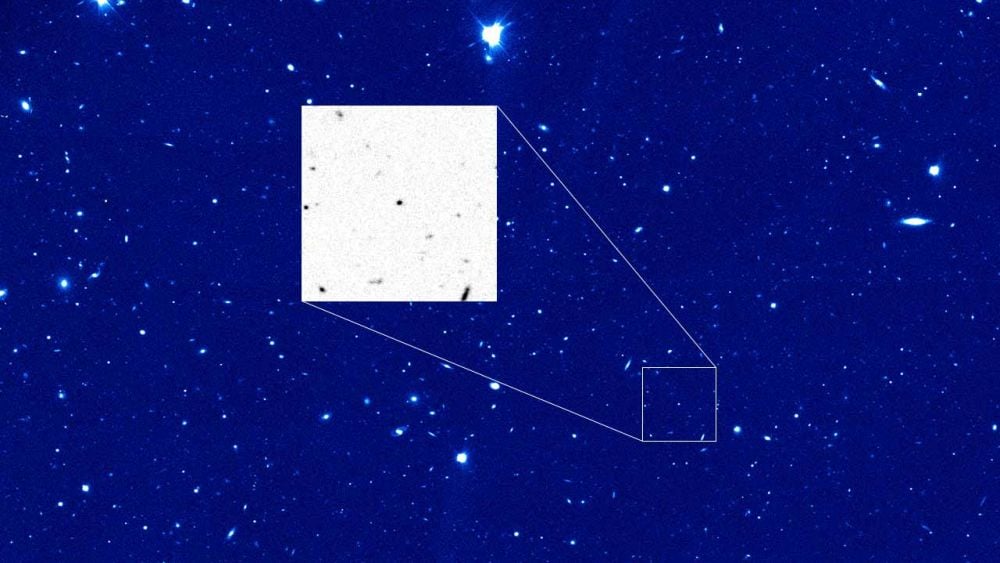
Японы эрдэмтэд Subaru Telescope-ийн архивын мэдээлэлд тулгуурлан сүүлт одны цөмийн физик шинж чанарыг судалж, тэдгээрийн үүсэл хувьслын талаар шинэ мэдээлэл олж авлаа.
Японы эрдэмтэд “Publications of the Astronomical Society of Japan” сэтгүүлд нийтлүүлсэн судалгаандаа 28P/Neujmin сүүлт одны цөмийг шинжилжээ. Нарнаас 10 астрономийн нэгжээс хол зайд орших энэхүү сүүлт од нь хийн бүрхүүл буюу “coma” үүсгэдэггүй тул эрдэмтэд түүний цөмийг шууд ажиглах ховор боломж олдсон байна. Чиба технологийн хүрээлэнгийн эрдэмтэн Такафуми Оотсубогоор ахлуулсан баг уг сүүлт одны 21 км диаметртэй цөмийг Subaru Telescope-ийн Hyper Suprime-Cam камерын тусламжтайгаар судалжээ.
Судалгааны үр дүнгээр 28P/Neujmin сүүлт одны өнгө нь D-төрлийн астероидтой ижил төстэй болох нь тогтоогдсон байна. Гэвч түүний гадаргуугийн бичил бүтэц, сүвэрхэг чанар нь астероидуудаас ялгаатай буюу илүү сийрэг бүтэцтэй болох нь илэрчээ. Энэ нь эртний нарны аймгийн үүсэлд “мөсөн” сүүлт од болон “чулуулган” астероидын хооронд тодорхой зааг байдаг гэсэн уламжлалт таамаглалыг эргэлзээтэй болгож байна.
Сүүлт од болон астероидын хоорондох ялгаа бүдгэрч байгаа нь эдгээр биетүүд ижил төстэй орчинд үүссэн байж болзошгүйг харуулж байна. Цаашид илүү хүчирхэг дуран авайнуудын тусламжтайгаар 4.5 тэрбум жилийн түүхтэй нарны аймгийн үүслийн нууцыг тайлах шаардлагатай байгааг судлаачид онцоллоо.
Дэлгэрэнгүйг эх сурвалжаас харах
Эх сурвалжийг нээх ↓
Observing comets is tricky. They’re easier to see when they’re closer to the Sun, but proximity to the star heats them up and releases volatiles. That creates a coma around the comet, which shrouds its nucleus, hiding it from studious observations.
So studying comets requires large telescopes that can see them further away, far from the Sun and without a thick coma. One such telescope is the National Astronomical Observatory of Japans’ (NAOJ) Subaru Telescope and its 8.2 meter primary mirror. The Subaru telescope was completed in 1998, and since then has been studying the sky from its location at the Mauna Kea Observatory on Hawaii.
Over its years of operations, the Subaru Telescope and its Subaru Prime Focus Camera (Suprime-Cam) have generated a huge archive of images, available to astronomers studying different aspects of space science. There are discoveries and knowledge hidden in those images. A team of Japanese scientists searched the Subaru’s archive for undiscovered images of a particular comet they wanted to study.
The Subaru Telescope with its 8.2 meter mirror sits atop the dormant shield volcano Mauna Kea on the island of Hawaii. Multiple telescopes are situated here, including the Keck Observatory, the Canada-France-Hawaii Telescope, and Gemini North. Image Credit: By Denys (fr) – Own work, CC BY 3.0, https://commons.wikimedia.org/w/index.php?curid=2731788
Their results are in a paper in Publications of the Astronomical Society of Japan titled “Opposition effect of comet 28P/Neujmin observed with Subaru Hyper Suprime-Cam.” The lead author is Takafumi Ootsubo, from the Planetary Exploration Research Center at the Chiba Institute of Technology in Japan.
Comet 28P/Neujmin orbits the Sun every 18 years and is about 21 km across. Astronomers are particularly interested in it because it’s a ‘naked’ comet. At large distances from the Sun, it has virtually no coma. This places it in a special situation; it’s rare to see the body of a comet without any coma at all.
“We present an observational study of the nucleus of comet 28P/Neujmin at a heliocentric distance exceeding 10 au, where coma contamination is effectively minimized,” the authors write.
At 21 km, it’s also one of the largest comets in its group, the Jupiter family comets. But the most scientifically interesting thing about comet 28P/Neujmin is that it’s quite similar to an asteroid. This makes it a good test-case for understanding the links between asteroids and comets.
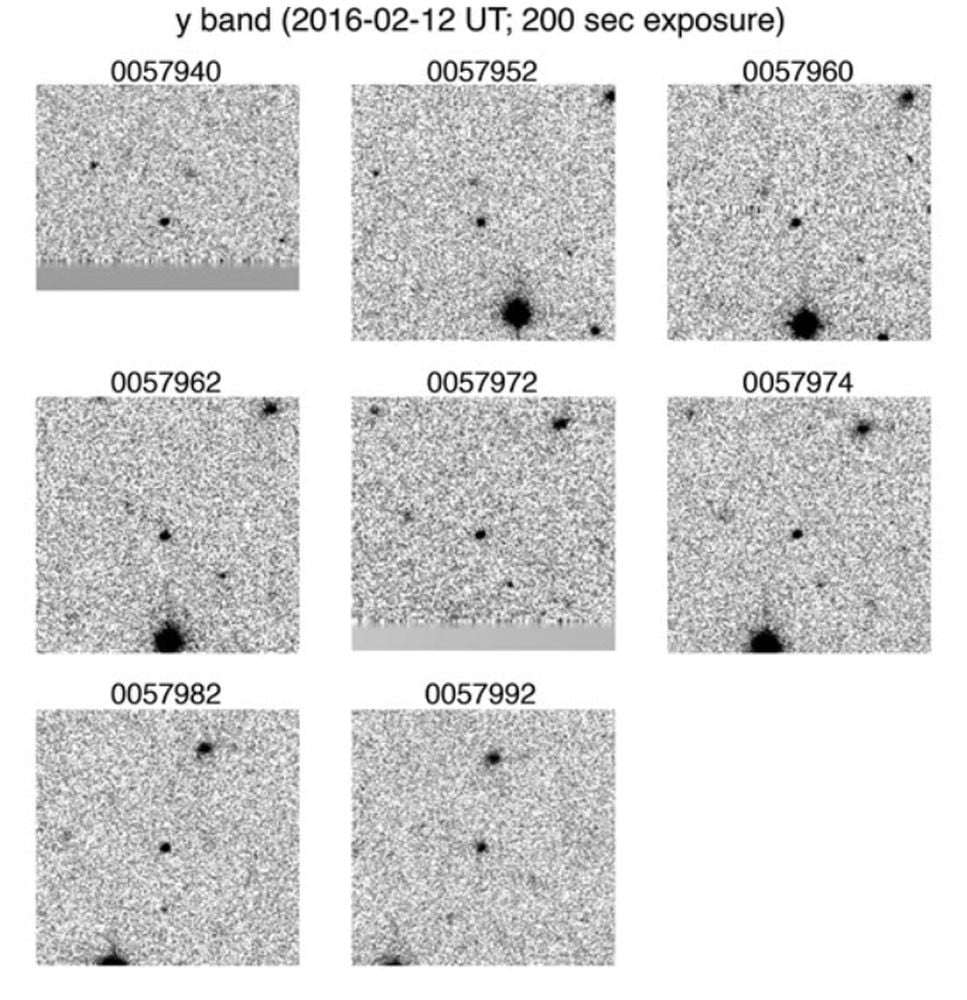 These are some of the images of comet 28/P Neujmin that the Subaru Telescope had in its archives. They don’t look like much, but these images, along with others, were enough for astronomers to understand the comet’s surface, and how it’s different from asteroids. Image Credit: Ootsubo et al. 2026. PASJ.
“Traditional models of the solar system formation postulated that “icy” comets and “rocky” asteroids possess substantially different physical properties and distinct origins,” the authors explain. But recent observations have clouded that picture. “Some asteroids contain water and hydrated minerals, while signs of hydrated silicates have been detected on comet nuclei,” they write. Researchers want to know which types of asteroids have some of the same properties as comet nuclei because that could give some insight into how they originated and evolved.
“The opposition effect (OE) in a magnitude-phase curve serves as a key indicator for determining which taxonomic group of asteroids, if any, cometary nuclei most closely resemble,” the researchers explain.
The opposition effect creates a surge in brightness from airless objects like comet 28P/Neujmin when they’re observed with very small phase angles. In opposition, we view the object from the same angle as the Sun shines on it. This means there are no shadows and the entire surface of the object appears with the same brightness.
The surge in brightness will have a graphable shape, and that’s affected by the properties of the surface. Albedo, grain-size, and other factors shape the brightness.
In this work, Subaru telescope observed comet 28P/Neujmin from a very favourable angle, and at more than 10 astronomical units from the Sun. The Subaru/HSC observations of comet 28P/Neujmin revealed colours that are very similar to a D-type asteroid. This is consistent with earlier spectroscopy of the comet. But the same observations also showed that it’s surface is different from C and D-type asteroids.
It’s grain-packing and small-scale porosity, for example, are different. This implies that even though the comet’s surface is spectrally similar to Type C and D asteroids, its structure is different. It, and comets like it, are more loosely packed or fluffier than those asteroids, even though they may have formed in similar environments.
“The Subaru HSC observations suggest that, although the nucleus color resembles that of D-type asteroids, the surface microstructure of comet 28P’s nucleus likely differs from those of C- and D-type asteroids,” the authors write.
The old dividing line between comets and asteroids, which says that comets are icy and asteroids are rocky, is becoming blurred. D-type asteroids look almost exactly like comets, at least spectrally and in terms of their composition. The Jupiter comets blur the line even further, since they’re similar to Jupiter Trojan asteroids. The groups could be siblings, just on different orbits.
Scientists likely have a long way to go before they reach clarity on this issue. The history of the Solar System is about 4.5 billion years long, and lots has happened. If they’re ever going to understand it, it’ll be because of better evidence from powerful telescopes.
With some help from naked photo-bombers like comet 28P/Neujmin.

