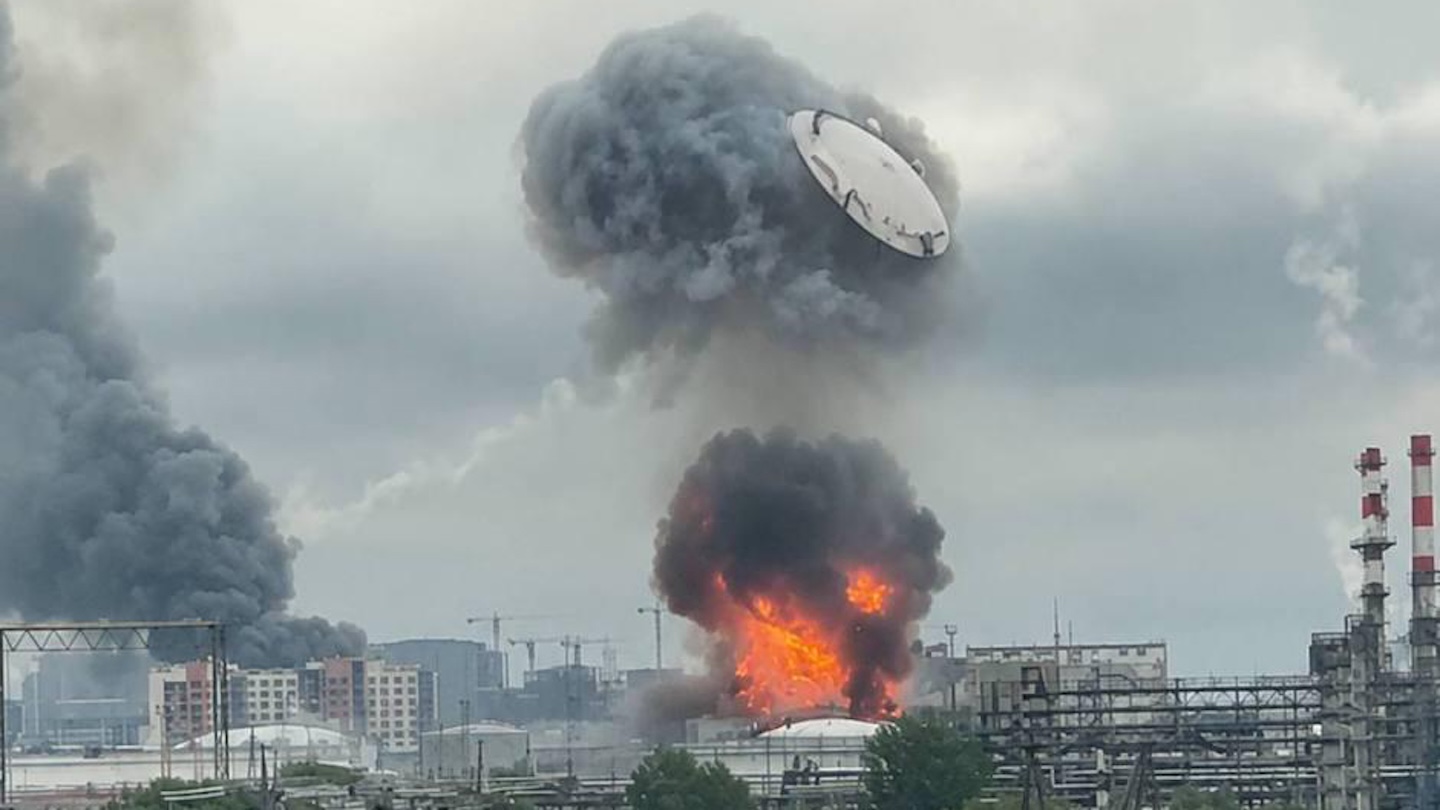
Украины зэвсэгт хүчин ОХУ-ын нийслэл Москва болон ойр орчмын бүс нутагт сүүлийн хоёр жилийн хугацаанд тохиолдоогүй өргөн хүрээтэй агаарын цохилтыг өглөө эрт хэрэгжүүллээ.
Зургаадугаар сарын 18-ны өглөө болсон энэхүү довтолгооны улмаас Москва хотын “Газпром” компанийн харьяа газрын тос боловсруулах үйлдвэр, тэр дундаа Капотня дахь байгууламж ноцтой хохирол амсаж, гал гарсан байна. Энэхүү үйлдвэр нь нийслэлийн бензин, дизель түлшний хэрэгцээний томоохон хувийг хангадаг стратегийн чухал объект юм. ОХУ-ын Батлан хамгаалах яамны мэдээлснээр, агаарын довтолгооноос хамгаалах хүчин 555 нисгэгчгүй онгоцыг устгасан гэж байгаа ч тус хотын дарга Сергей Собянин зарим дрон газрын тос боловсруулах үйлдвэр болон худалдааны төвд нөлөөлснийг хүлээн зөвшөөрөв.
Украины Ерөнхийлөгч Владимир Зеленский энэхүү ажиллагааг ОХУ-ын зүгээс Украины эсрэг хийсэн цохилтуудын хариу арга хэмжээ хэмээн тодорхойлсон байна. Тодруулбал, долоо хоногийн эхээр Киевийн түүхэн дурсгалт сүм хийд болон иргэний дэд бүтцэд Оросын талаас цохилт өгсний хариуд ийнхүү дайралт хийсэн гэж үзэж байгаа юм.
Довтолгооны улмаас Москвагийн нисэх буудлуудын үйл ажиллагаа доголдож, хотын замын хөдөлгөөнд саатал үүсэхийн зэрэгцээ орон сууцны өндөр барилга, үйлдвэрлэлийн байгууламжууд гэмтжээ. Орон нутгийн засаг захиргааны мэдээлснээр 16 хүн бэртэж гэмтсэн байна. ОХУ-ын хувьд энэхүү довтолгоо нь түлшний хомсдол үүсгэж, улмаар гаднаас түлш импортлоход хүргэж байгаа нь эдийн засагт нь хүндрэл учруулж эхэлснийг шинжээчид онцолж байна.
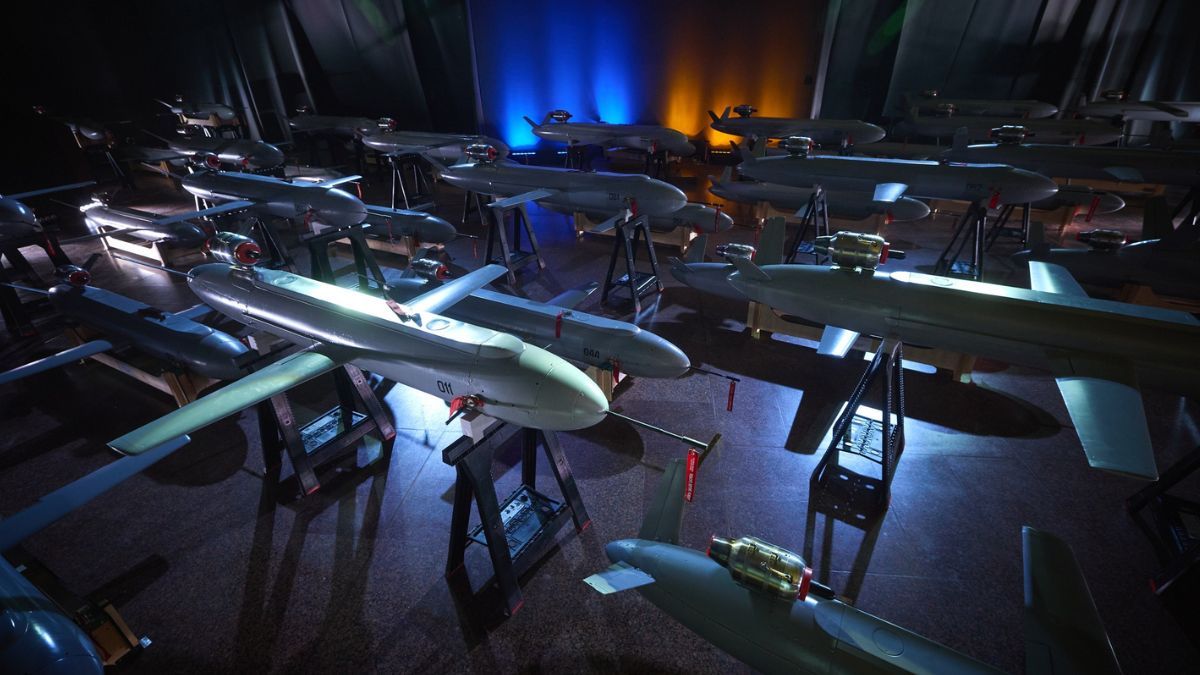
Мөргөлдөөний талбарт “Bars” зэрэг холын зайн тусгалтай, пуужин болон нисгэгчгүй онгоцны шинжийг хослуулсан зэвсэглэл ашиглагдаж буй нь Украины цэргийн чадавх нэмэгдэж байгааг харуулж байна. Оросын тал нийслэл хотоо хамгаалахын тулд Pantsir зенит пуужингийн систем болон гар ажиллагаатай зэвсгүүдийг ашиглаж байгаа боловч Украины талын алсын зайн цохилтыг бүрэн зогсоож чадахгүй байгаа нь ажиглагдлаа.
Дэлгэрэнгүйг эх сурвалжаас харах
↓Эх сурвалжийг нээх ↓
In what is reportedly the biggest air raid on the Russian capital in two years, multiple Ukrainian drones and cruise missiles hit several locations across Moscow early today. With heavy bombardment occurring during daylight hours, residents of the city have captured and shared dozens of videos showing dramatic impacts and interception attempts. The attack may signal a new phase of Ukraine’s long-range air war against Russian interests.
Most remarkable, perhaps, are the scenes from a key oil refinery in the Kapotno area, in the southeast of Moscow. Videos from the attacks here show multiple fireballs and plumes of black smoke rising from the refinery, which is run by a subsidiary of the state-owned Gazprom. At one point, we can see the disc-shaped roof of one of the storage tanks being thrown into the air, before cartwheeling down. This incredible detonation appears to have been caused by an errant Russian missile, not a Ukrainian weapon.
Epic moment of the oil tank lid being ripped off after a kamikaze drone strike on the
Moscow oil depot pic.twitter.com/ei8TEL1fIs
—
MilitaryNewsUA
(@front_ukrainian) June 18, 2026
The refinery appears to have been at least one of the primary targets of the raid, continuing Kyiv’s long-running campaign directed against Russian energy infrastructure. It is notable that at least some of the videos reveal efforts to protect the refinery in the form of anti-drone netting, which seems to have little to no effect against heavier weapons. More substantial cage-type protection for refineries is something we have seen come out of Ukraine’s offensive against Russian oil infrastructure earlier in the war and subsequently appeared during the conflict in the Middle East earlier this year, to help defend against Iranian drone attacks.
This particular refinery is one of the most critical in Moscow, supplying up to 40 percent of the capital’s petrol and about 50 percent of its diesel fuel. The strike was the second in two days on the facility. The previous one was described by Ukrainian President Volodymyr Zelensky as “a just response to Russian strikes.” Reportedly, the strike on Tuesday had already halted operations at the refinery.
Black rain now in Moscow… pic.twitter.com/QtNJ78u3eG
— Volodymyr Tretyak
In the wake of today’s Ukrainian attacks, Zelensky framed this as a response to Russia’s striking of a historic Kyiv monastery earlier this week.
On Monday, five people were killed in Kyiv, and the Dormition Cathedral in the Pechersk Lavra monastery complex, a UNESCO World Heritage Site and one of Ukraine’s most significant religious and cultural sites, was badly damaged.
USF Struck the Moscow Oil Refinery for the Second Time
On June 18, operators of the @1usc_army , together with the 412th Nemesis Brigade, the @Raid_413 , and the @414magyarbirds , in coordination with the @SOF_UKR, DIU, SSU, and other components of Ukraine’s Defense Forces,… pic.twitter.com/VKWC9RKnOi
—
The Russian media outlet RIA Novosti said the overnight attack on energy facilities in Moscow was the biggest in two years.
According to reports, the Ukrainian strikes caught many of the city’s residents off guard, leading to panicked messages on social media.
“Well, would you look at that… The war has come to us,” — Moscow resident remarks while filming this morning’s attack on the Moscow Oil Refinery. https://t.co/5SmqPTxOkh pic.twitter.com/UYTC7MWIMU
— Special Kherson Cat

The Russian Ministry of Defense claims that its air defenses intercepted and destroyed 555 Ukrainian drones over multiple regions overnight. The number actually shot down could not be independently confirmed.
The mayor of Moscow, Sergei Sobyanin, said: “Air defense forces are continuing to repel a large-scale attack,” but admitted that several drones had reached the oil refinery and that the Sadovod shopping center, also in the south-eastern part of the city, was damaged. Sobyanin claimed that about 180 drones heading for the capital had been downed.
Elsewhere in the city, air traffic was disrupted at Vnukovo, Sheremetyevo, and Zhukovsky airports. Sheremetyevo seems to have been especially affected, with reports of evacuations and people seeking refuge in the parking area. Meanwhile, traffic was halted on Moscow’s ring road near the refinery, according to the interior ministry. A high-rise building in Zhukovsky district, not far from the refinery, also seems to have been struck.
Andrei Vorobyov, the governor of the Moscow region, said that a high-rise residential building, an industrial facility, and a number of private houses had been damaged in the wider area around the capital. One video shows an attack drone smashing into a construction crane on its way to its target. Vorobyov said that 16 people had been injured in the attack.
Moscow really needs to do something about all these cranes. They’re seriously interfering with Ukrainian drone traffic
pic.twitter.com/FffGLVLycO
— Special Kherson Cat
Clearly, a significant number of drones and cruise missiles did manage to get through, or otherwise efforts to intercept them caused damage through falling debris, as seen in the video below, or stray air defense missiles.
Videos show both propeller-driven and jet-propelled long-range one-way attack drones in the skies over the Russian capital.
Among them appear to be examples of the Bars, part of a growing family of so-called “drone-missiles,” which combine the features of cruise missiles and uncrewed aerial vehicles (UAVs). Previously, these had been considered as medium-range strike systems, with a maximum range of around 500 miles. Their presence over Moscow would indicate that their range is greater, perhaps evidence that they have been further adapted or reworked.
As far as Russian air defenses are concerned, videos from Moscow painted a desperate picture, including at least one likely missile interceptor from a Pantsir short-range air defense system streaking past a Ukrainian drone before making a sharp turn in the opposite direction. In the past, we have seen examples of the Pantsir installed on top of buildings in Moscow, and last month footage appeared showing thecounter-drone-optimized SMD-E variantbeing lifted onto the top of a skyscraper by helicopter.
Ukrainian strike UAVs are flying over burning Moscow like they own the place.
Meanwhile, Russian air defenses continue to be ineffective. https://t.co/VTqT7oIIyg pic.twitter.com/3B602KqAx8— Roy
(@GrandpaRoy2) June 18, 2026
Impressive footage of the double strike by
—
Additional footage shows soldiers or security forces using rifle-caliber weapons and man-portable air defense systems (MANPADS) in an effort to bring down drones at very short range.
Fucking chaos.
Several dickheads with rifles and MANPADS trying to shoot down incoming Ukrainian sanctions.
Civilians are wandering around and laughing. pic.twitter.com/oBZSIcQ7NG
— 𝔗𝔥𝔢 𝕯𝔢𝔞𝔡 𝕯𝔦𝔰𝔱𝔯𝔦𝔠𝔱△
(@TheDeadDistrict) June 18, 2026


A MANPADS operator engaging a Ukrainian strike drone on its approach to the Moscow Oil Refinery. https://t.co/XKYcd7m0py pic.twitter.com/1wxlCBCmKT
— Special Kherson Cat
One video apparently even shows an individual taking aim at a Ukrainian drone using a 9mm Makarov pistol.
For Russian President Vladimir Putin, the very public nature of the attacks on Moscow is especially embarrassing.
The Russian leader had previously warned of impending “systemic strikes” on Ukraine, but Kyiv’s continued ability to hit back at scale, and to target the Russian capital in particular, is now combined with the biting effects of fuel shortages across the country.
These past few weeks have been nothing but a disaster for the Kremlin.
Moscow, Russia
— Thomas van Linge (@ThomasVLinge) June 18, 2026
In an unusual move, Russia, which is the world’s third-biggest oil producer, is to import fuel by sea this month as it confronts shortages caused by relentless Ukrainian drone attacks on its refineries.
Andrey Gurulyov, a retired lieutenant general and deputy of the state duma (the lower house of the Russian Federal Assembly), called for Russia to “strike the enemy mercilessly” in response to the attack. “We need to strengthen our air defense system, but most importantly, we need to hit the enemy,” he told the RTVI news outlet. “Hit the enemy mercilessly, without overthinking it.”
— C4H10FO2P
(@markito0171) June 18, 2026
Just before the latest Ukrainian air attack, President Zelensky said he had held “an important coordination call” with U.S. President Donald Trump and French President Emmanuel Macron that may “bring about significant change.”
Yesterday, Zelensky said he had won key pledges of further support from world leaders attending the G7 Summit in France. “These last few days were very important for Ukraine because it is the reunification of the G7 around Ukraine,” Macron told reporters as he and Trump left the Palace of Versailles near Paris.
In the meantime, with little progress being made by either side on the battlefield, the conflict has increasingly settled into tit-for-tat air assaults on key infrastructure and cities.
Kyiv was this week hit by a major barrage of ballistic missiles and drones, and these, together with the heavy attacks on the Russian capital in the last couple of days, signal a further escalation of the air war between Moscow and Kyiv. Beyond that, this latest barrage on Moscow signals what could be a new, far more aggressive phase of Ukrainian long-range strike operations targeting the economic heart of Russia and its seat of power.
Contact the author: thomas@thewarzone.com
The post Extraordinary Footage From Moscow Under Heavy Ukrainian Aerial Attack appeared first on The War Zone.

