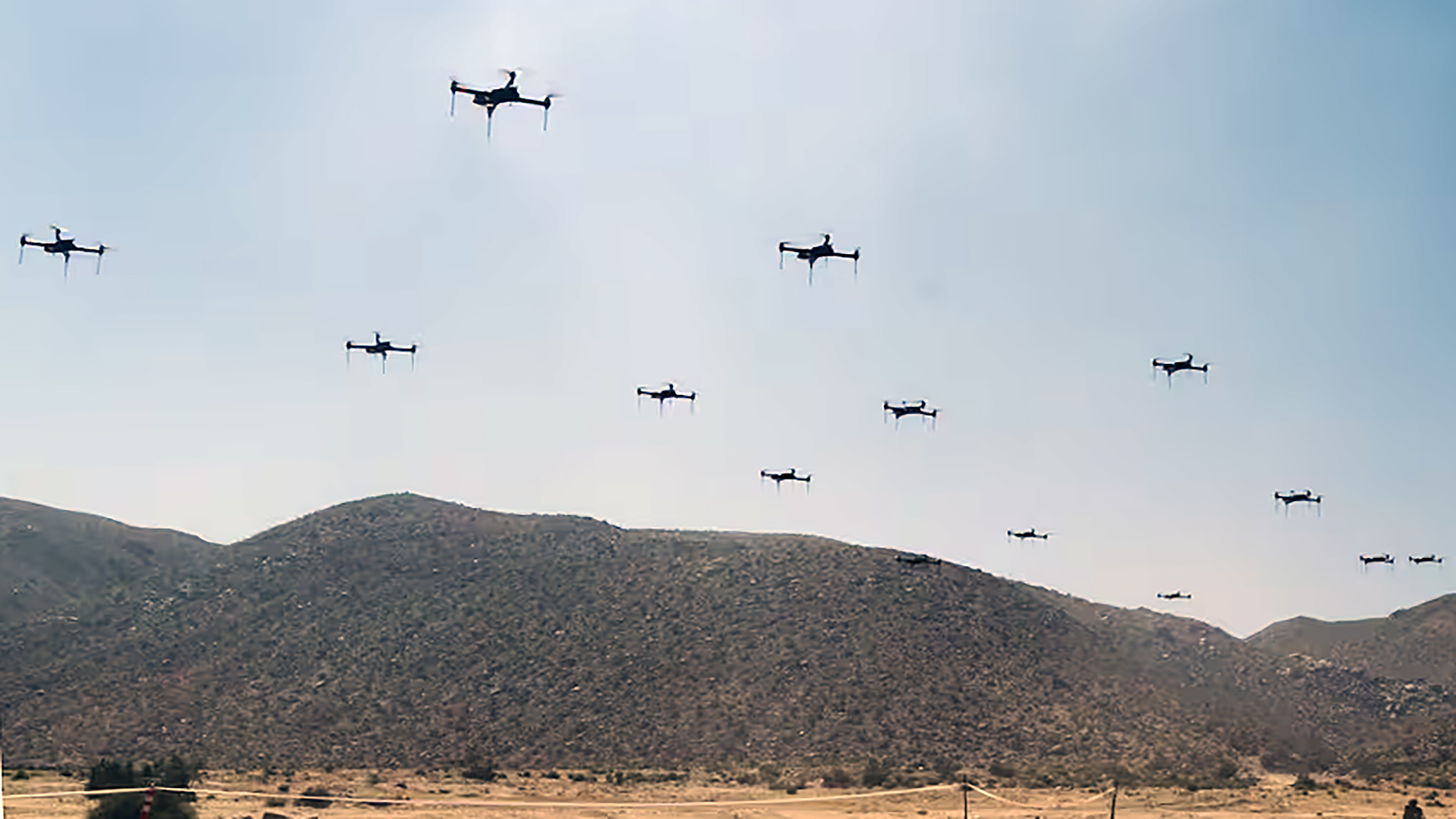
АНУ-ын Номхон далайн арми (USARPAC) бүс нутаг дахь байлдааны ажиллагааны хариу үйлдлийн хурдыг нэмэгдүүлэх зорилгоор 7-р явган цэргийн дивизийн олон домэйнт командлал (7th ID MDC-PAC)-ыг албан ёсоор байгууллаа.
Вашингтон мужийн Жоинт Бэйс Льюис-Маккорд баазад төвлөрөх энэхүү шинэ нэгж нь 7-р явган цэргийн дивизийн маневрлах чадварыг 1-р олон домэйнт ажлын хэсгийн (MDTF) тагнуул, кибер, сансар, цахим дайн болон алсын зайн цохилт өгөх чадавхтай нэгтгэж байна. Командлагч, хошууч генерал Бернард Ж.Харрингтоны мэдээлснээр, тус нэгж нь ирээдүйн болзошгүй мөргөлдөөний үед дайсныг олон тооны дрон ашиглан “дарах” стратегийг баримтлах юм. Үүнд хиймэл оюун ухаанд суурилсан команд удирдлагын системээр дамжуулан хүний оролцоог хязгаарлаж, тагнуулын болон цохилтын дронуудыг уялдуулан ажиллуулах ажиллагаа багтаж байна.
Украин болон Ойрх Дорнодын мөргөлдөөний туршлагаас харахад, дайсны агаарын хамгаалалтыг төөрөгдүүлэх, сум хэрэгслийг нь үр ашиггүй заруулах зорилгоор хуурамч дрон ашиглах нь чухал ач холбогдолтой болохыг тус командлал онцолжээ. Иймд АНУ-ын арми өөрийн бүс нутаг дахь онцлогт тохирсон дрон болон цахим дайны системүүдийг туршиж, боловсруулж байна.
Командлалын удирдлага энэхүү бүтэц нь аливаа тодорхой улс орон эсвэл бүс нутагт бус, харин аливаа болзошгүй аюул заналхийллийг сөрөн зогсох чадавхыг бэхжүүлэхэд чиглэж байгааг мэдэгдэв. Өдгөө тус нэгж нь Номхон далайн өргөн уудам нутаг дэвсгэрт ажиллахын тулд төрөл бүрийн дрон, технологийн шийдлүүдийг цэргүүдийн дунд туршиж, бодит үр дүнг хянан ажиллаж байна.
Дэлгэрэнгүйг эх сурвалжаас харах
↓Эх сурвалжийг нээх ↓
On Thursday, U.S. Army Pacific (USARPAC) stood up a new command to speed up reaction times and sustain operations within the anti-access/area denial environments of the Pacific. To help achieve that goal, the commander of this new unit told TWZ he wants to be able to saturate any future adversary with so many drones they have trouble operating.
“We have learned, particularly looking at Ukraine, there really is no sanctuary area that is protected from observation and potential targeting,” Maj. Gen. Bernard J. Harrington told us during a media roundtable to introduce his new command. It’s called the 7th Infantry Division Multi-Domain Command – Pacific (7th ID MDC-PAC). Headquartered at Joint Base Lewis-McChord in Washington, it combines the 7th Infantry Division and the 1st Multi-Domain Task Force (MDTF). The idea is to merge the maneuver capabilities of the 7th ID’s two Stryker brigades with the long-range sensing, fires, cyber, space, electronic warfare, and information capabilities of the MDTF.
The new unit was created as the U.S. still struggles to be on the leading-edge of modern drone warfare, especially when it comes to the lower-end segment of this broad capability set, a deficit we have frequently highlighted. This is a concern top Army officials have acknowledged to us.
“As we look at our employment of drones,” Harrington proffered, “we are looking at a host of not just traditional sense-and-strike drones, but how do we couple that — utilizing an adaptive and agentic C2 [command and control system] — to long-range one-way attack, to be able to overwhelm potential adversarial systems by a volume that is connected from our sensor drone all the way to our long-range one-way attack drone.”
Harrington was referring to an AI-driven system that can make and execute decisions on its own — routing data, repositioning sensors, matching targets to shooters — without requiring a human to manually approve each step. He later described it as being a “soldier-on-the-loop, not in-the-loop” system, meaning that a human monitors and can override the system’s actions.
You can read all about how AI will enable the future of lower-end drone warfare in our deep dive here.
In another lesson from Ukraine, as well as conflicts in the Middle East, Harrington wants to be able to use decoy drones to “confuse and potentially deceive an adversary.” The goal is to “deplete potential magazine depth.”
We saw this play out in Ukraine, where Russian mass barrages typically use decoy drones to overwhelm Ukrainian air defenses, confuse its sensors and force the expenditure of valuable air defense munitions. Ukraine eventually responded in kind, with its own decoy drones, to achieve the same effects.
The need for the U.S. to develop an a vast arsenal long-range one-way attack drones that can also serve as decoys to consume enemy effectors is a topic TWZ has addressed in the past.
You can see one of the Russian decoy drones in the image below.
Harrington added that he is also looking at electronic warfare drones “to help isolate, and then enable other drones to be effective. So when we look at the family of systems, it is not just one role for any one of our drones — it’s how do they pair together, and then how do we get sensor to shooter most effectively to target any adversary appropriately.”
Harrington declined to say what kinds of drones the new command aims to field, though it should be noted that U.S. Central Command recently used Low-Cost Uncrewed Combat Attack System (LUCAS) kamikaze drones, a design reverse-engineered from the Iranian-designed Shahed-136, in the war against Iran. It was the first time those drones were used in combat.
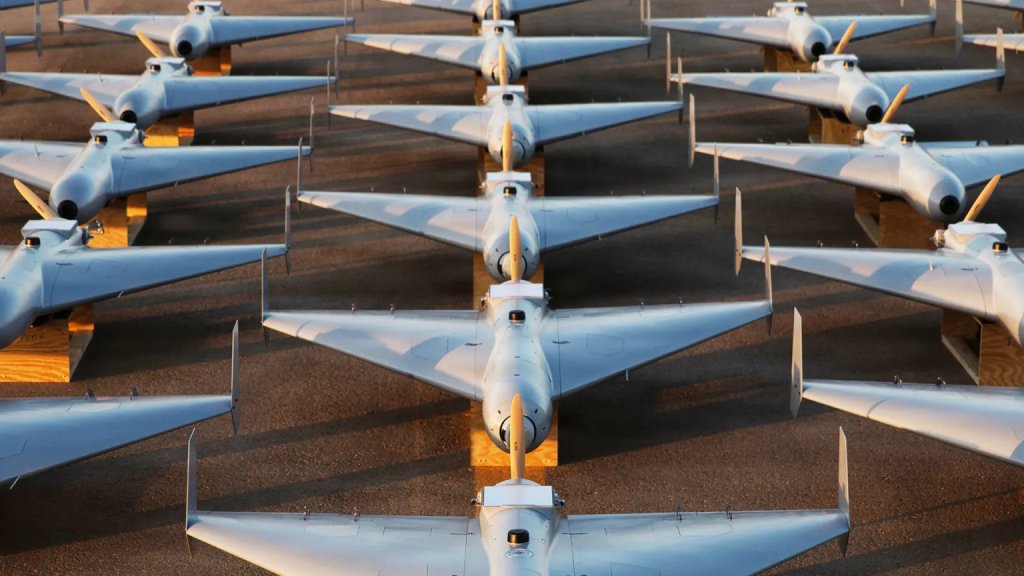
“There are a host of drones that we are using from multiple vendors, and really what we’re looking at is how do we start bridging the gap — because I would say with the multi-domain task force, we got to a point for the first time that I’ve seen where we could now engage farther than we could sense,” he posited. “So we have worked very, very closely with several vendors in order to close that distance.”
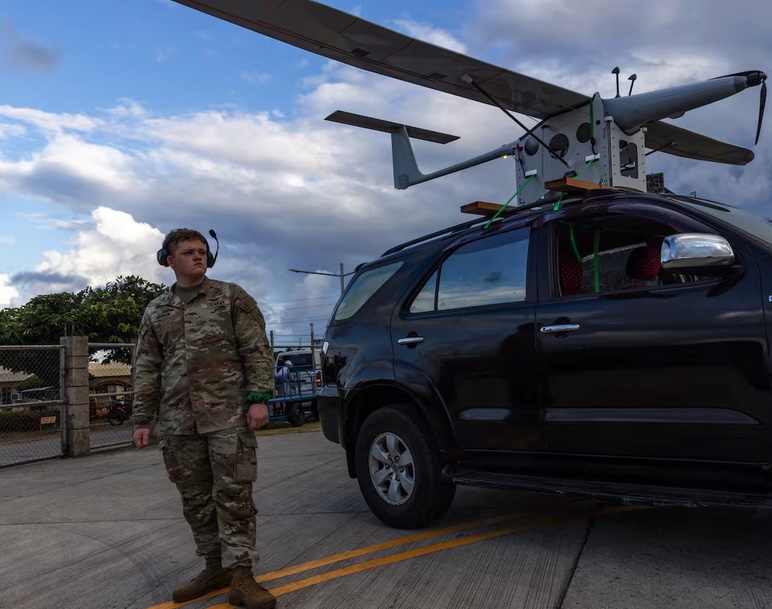
A key to making this all work is getting these drones into the hands of troops to see how these systems actually function across the wide range of environments where the Army operates in the Pacific.
“We’ve got Arctic steppe in Alaska and the high north that are going to require a different type of drone and different types of employment than you would have in a jungle environment in Hawaii or Malaysia, which is different than a desert environment in the Australian Outback,” USARPAC commander, Gen. Ronald Clark, told us.
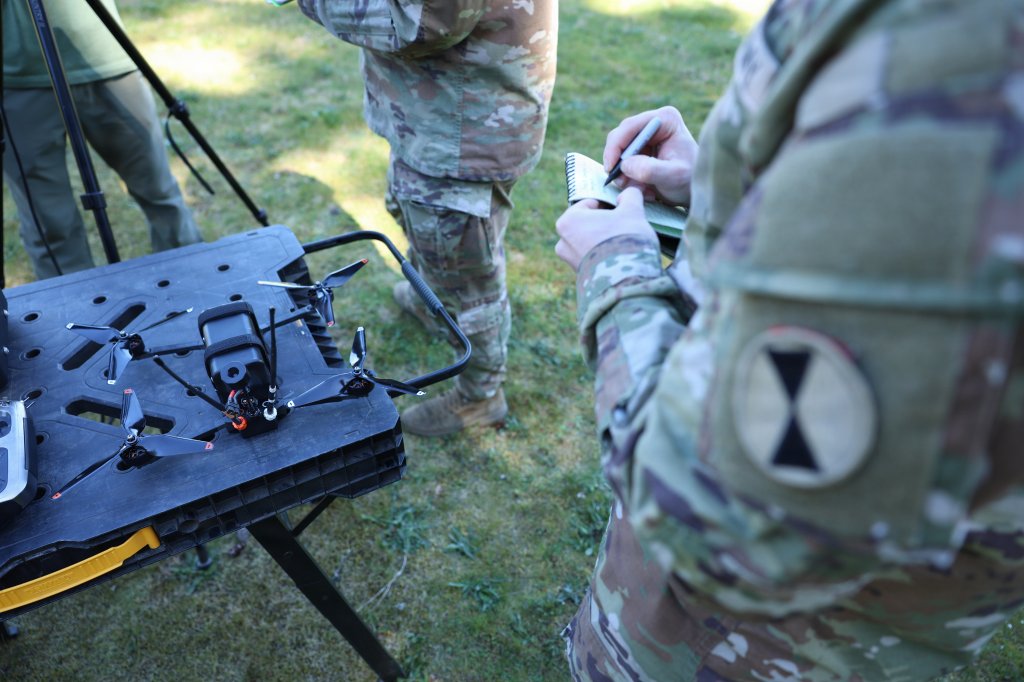
“It’s challenging, but we’re dealing with the best and brightest that we have — our young troopers out there are very comfortable with having technology in their hands, and very comfortable with giving feedback associated with what works and what does not, because their buddies’ lives depend on it,” Clark posited. “It’s literally a responsibility that every soldier takes on and takes very seriously.”
“The other thing I’d add is the distances we have to operate,” Clark noted. “For instance, if you drew a box that was 2,000 nautical miles in each direction and started in Cambodia — went east to the Philippines, south to Indonesia, and then back west to Malaysia, and then back to Cambodia — that box is roughly the same size as the box you would draw if you placed it over Western Europe, from the UK to Finland to Turkey to Spain.”
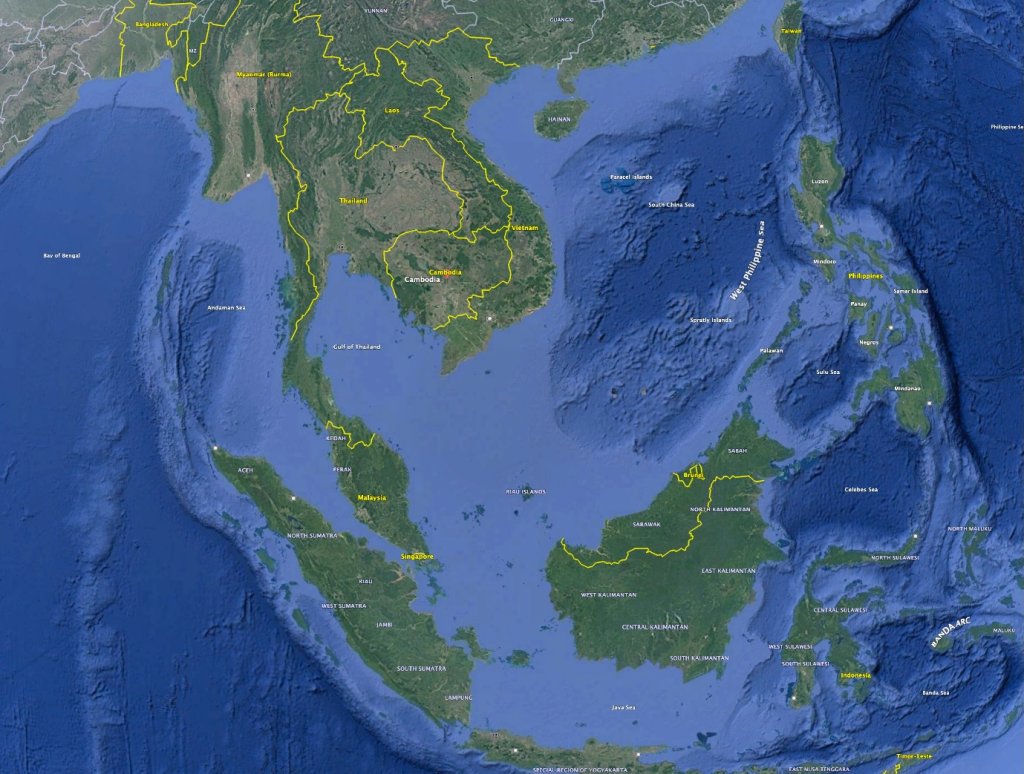
Interestingly, the officials leading this effort declined to name a specific adversary and there was no mention of China at all, even though that nation is the primary pacing threat of the service and by far the biggest challenge in the region.
“The multi-domain command Pacific is not tied to a specific adversary, and it’s not tied to a specific location,” Clark explained when asked about threats from North Korea. “It’s a capability that we have built to counter any threat from any adversary, so it’s not necessarily focused on a specific part of the region or a specific adversary.”
As we noted earlier in this story, this new command is being set up as the Army has struggled to catch up to drone warfare developments aboard. China has invested heavily in lower-end drone warfare at the infantry level up to long-range one-way attack drones. The country’s capacity to mass produce all types of drones rapidly on gigantic scales remains a real concern, too. This is not lost on U.S. Army leadership.
“We are behind on long-range sensing and long-range launched-effect strike,” Maj. Gen. James (Jay) Bartholomees, commanding general of the Hawaii-based 25th Infantry Division, told us last year at the Association of the U.S. Army’s (AUSA) annual symposium. “We absolutely need to build this capability quickly. We need to test it in our region; we also need to work with our allies and partners to do the same.”
The Army, it seems, is still trying to figure this all out.
Given that 7th ID MDC-PAC is essentially only a day old, there is a long way to go before the Army can draw any conclusions about the effectiveness of this concept. There are still many unknowns regarding what kind of drones the division has and is seeking, how many they need and the timelines for procurement. Regardless, setting up a new unit concentrating on melding drone warfare with the maneuver capabilities of Stryker brigades is a clear indication that the Army realizes it has to change how it operates to succeed in a Pacific fight.
Contact the author: howard@twz.com
The post Army’s Newest Unit Wants To “Overwhelm” Adversaries With Drones In Pacific Fight appeared first on The War Zone.

