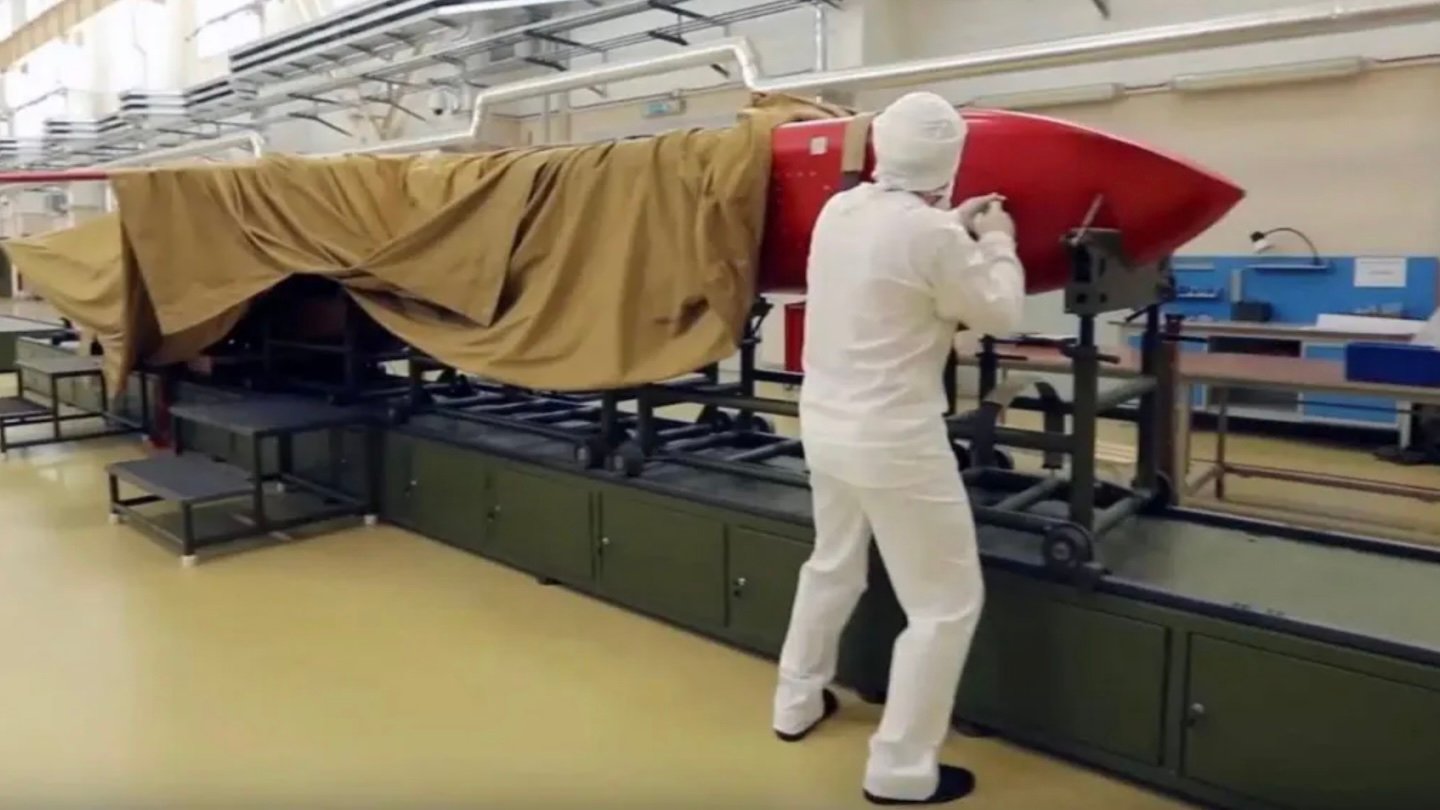
Массачусетсийн Технологийн Их Сургуулийн эрдэмтэд Оросын цөмийн хөдөлгүүртэй “Буревестник” (NATO-гийн ангиллаар SSC-X-9 Skyfall) далавчит пуужингийн ажиллагааны зарчмыг шинжилж, уг зэвсэг нь нислэгийнхээ туршид цацраг идэвхт бодис ялгаруулдаг болохыг тогтоожээ.
Судлаач Жэйк Хекла, Р.Скотт Кемп нарын дүгнэлтээр, уг пуужин нь агаарыг реакторын гол дундуур шууд дамжуулан халааж түлхэлт үүсгэдэг “шууд эргэлтийн” системтэй ажээ. Энэхүү технологи нь хөдөлгүүрийн бүтцийг хялбарчлах боловч агаарт цацраг идэвхт изотопуудыг цацаж, хүрээлэн буй орчинд аюул учруулах өндөр эрсдэлтэй юм. Мөн нислэгийн явцад үүсэх халуун болон даралт нь реакторын голыг зэврүүлж, цацраг идэвхт тоосонцор ялгаруулах нэмэлт хүчин зүйл болдог байна.
ОХУ 2025 оны аравдугаар сард уг пуужингийн 15 цаг үргэлжилсэн туршилтыг амжилттай хийснээ зарласан нь дэлхийн түүхэнд цөмийн хөдөлгүүртэй нисэх төхөөрөмжийг ийм хугацаагаар ажиллуулсан анхны тохиолдол болжээ. Гэсэн хэдий ч мэргэжилтнүүд энэхүү зэвсэг нь байлдааны хувьд хязгаарлагдмал ач холбогдолтой бөгөөд хурд багатай, илрүүлэхэд хялбар, мөн цацраг идэвхт ул мөр үлдээдэг тул стратегийн давуу тал багатай гэж үзэж байна.
Олон улсын стратегийн судалгааны хүрээлэнгийн шинжээч асан Уильям Алберкийн тэмдэглэснээр, энэхүү пуужин нь цэргийн зориулалтаас илүүтэйгээр ирээдүйн дэвшилтэт технологиудыг турших, эсвэл улс төрийн бэлгэдэл болох зорилготой байж болзошгүй юм. Хэдийгээр “Буревестник” нь хязгааргүй тусгалтай гэгддэг ч түүнийг ашиглах нь зардал ихтэй, аюултай төдийгүй цөмийн хөдөлгүүртэй зэвсэглэлийн шинэ уралдааныг өдөөх эрсдэлтэй гэж шинжээчид болгоомжилж байна.
Дэлгэрэнгүйг эх сурвалжаас харах
↓Эх сурвалжийг нээх ↓
Russia’s mysterious Burevestnik (also known to NATO as SSC-X-9 Skyfall) cruise missile likely leaves a trail of radioactive material in its wake, making the weapon even more alarming than was first thought. This is the conclusion of two scientists from the Massachusetts Institute of Technology (MIT), who have recently published a detailed analysis of one of the so-called ‘super weapons’ revealed by Russian President Vladimir Putin back in 2018.
The report, from Jake Hecla, an MIT professor who covers aerospace and nuclear science and engineering, and co-author R. Scott Kemp, provides the most compelling analysis so far on how the Burevestnik is actually powered. Uncertainty around this has led to previous questions about whether Russia’s claims of nuclear propulsion for the weapon even stack up.
First, it’s worth recalling what we know about the Burevestnik program’s development milestones, which appear to have been punctuated by accidents.
It is also worth noting that there have been previous efforts to create nuclear-powered aircraft and missiles.
During the 1950s, both the Soviet Union and the United States tested airborne nuclear reactors aboard strategic bombers, the B-36 Peacemaker and the Tu-95 Bear, respectively. Neither of these trials actually saw the reactors drive the aircraft’s engines.
Under Project Pluto, the United States studied a nuclear-powered cruise missile and got as far as testing a reactor on the ground in 1964, before the idea was abandoned. The Pluto concept of operation was somewhat different to the Burevestnik, with the missile intended to fly at treetop level at Mach 3.5 and dispense nuclear weapons at different points along its flight path by performing “pop-up” maneuvers.
Fast forward to 2018, and Putin disclosed the Burevestnik’s existence, when it was presented as one of six ‘super weapons’ that also included hypersonic weapons and a nuclear-powered, nuclear-armed torpedo.
Soon after Putin’s 2018 announcement, the Norwegian-based environmental group Bellona suggested that a radiation spike in the Arctic that same winter may have been caused by a test of the missile.
Later in 2018, a U.S. intelligence report described the loss at sea of a Russian nuclear-powered missile during a 2017 test. The report added that Russia was expected to embark on a search and recovery mission to try to lift the missile’s wreckage from the seabed.
Then, in 2019, an explosion occurred aboard a barge in the White Sea, outside Nenoksa, killing five Rosatom scientists. It also led to a radiation spike in the Russian city of Severodvinsk, as you can read more about here. The explosion has been blamed on a reactor from a Burevestnik recovered from the sea, likely the one that was lost in 2017.
Last October, Russia’s Chief of the General Staff, Valery Gerasimov, announced that a successful test of the Burevestnik had been carried out, high above the Arctic Circle. Gerasimov said that the 15-hour flight “is not the [maximum] limit” for the missile. This appears to have been the first long-endurance test of the missile.
Hecla and Kemp agree that the October 2025 test was a success and that, moreover, it marks the first time a true nuclear-powered aircraft has ever flown for a sustained period.
This leads to the question of how the Burevestnik actually converts energy from its nuclear reactor into propulsive power to keep it in the air.
Hecla and Kemp may well have provided the answer.
Based on data that the researchers gathered, the size, shape, and performance of the Burevestnik indicate a different kind of propulsion system than envisaged for Project Pluto. The U.S. concept involved a ramjet, required to ensure supersonic performance in the atmosphere.
In the 1960s, the U.S. Air Force explored this idea with itsSupersonic Low Altitude Missile, or SLAM. This weapon employed anuclear-powered ramjetalong with conventional rocket boosters to kickstart the system. Once at the appropriate speed, the engine would blow air over the reactor, which could have enough fuel to operate for weeks or months on end, and then force it out of an exhaust nozzle to produce thrust.

The Burevestnik is “very obviously a subsonic system,” Hecla told NPR.
By comparing open-source imagery of the Burevestnik, the researchers calculated that the missile is approximately 31 feet (9.5 meters) in overall length, with a wingspan of approximately 18 feet (5.6 meters). It likely flies at a speed of around Mach 0.75.
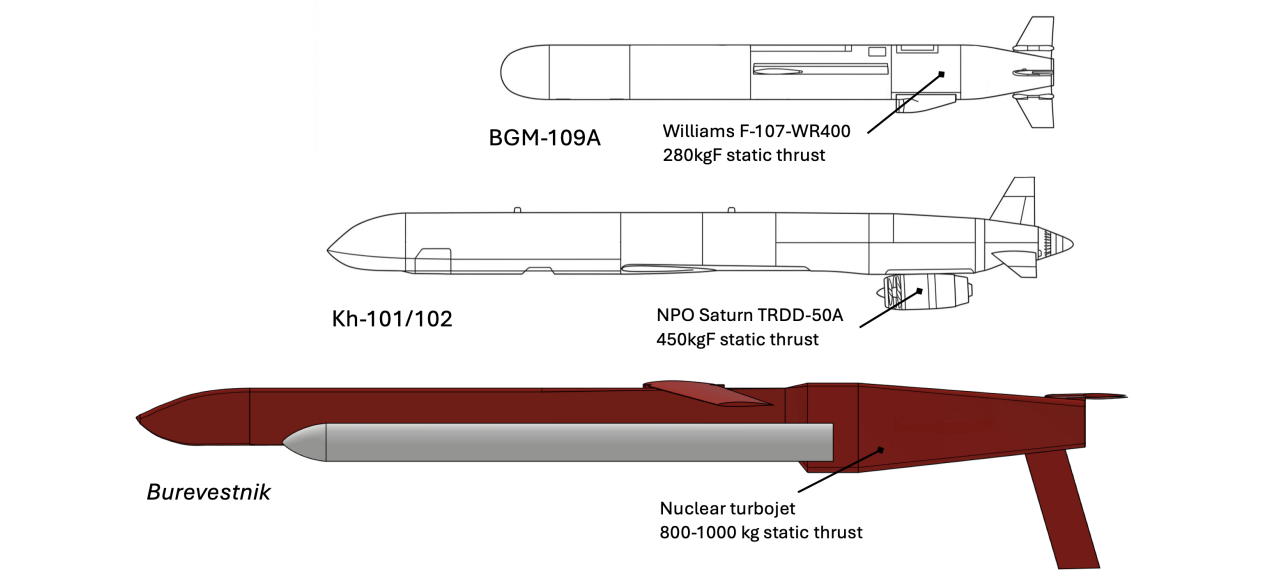
They conclude that the Burevestnik is “almost certain” to use a direct-cycle air-breathing nuclear propulsion system, which probably drives a turbojet.
In a direct-cycle system, air is drawn from the atmosphere and passes directly through the reactor core. A compressor forces the air through thousands of narrow, tube-like channels surrounding the nuclear fuel, where the heat generated by nuclear fission raises the air’s temperature. As the heated air expands, it exits the rear of the engine to produce thrust.
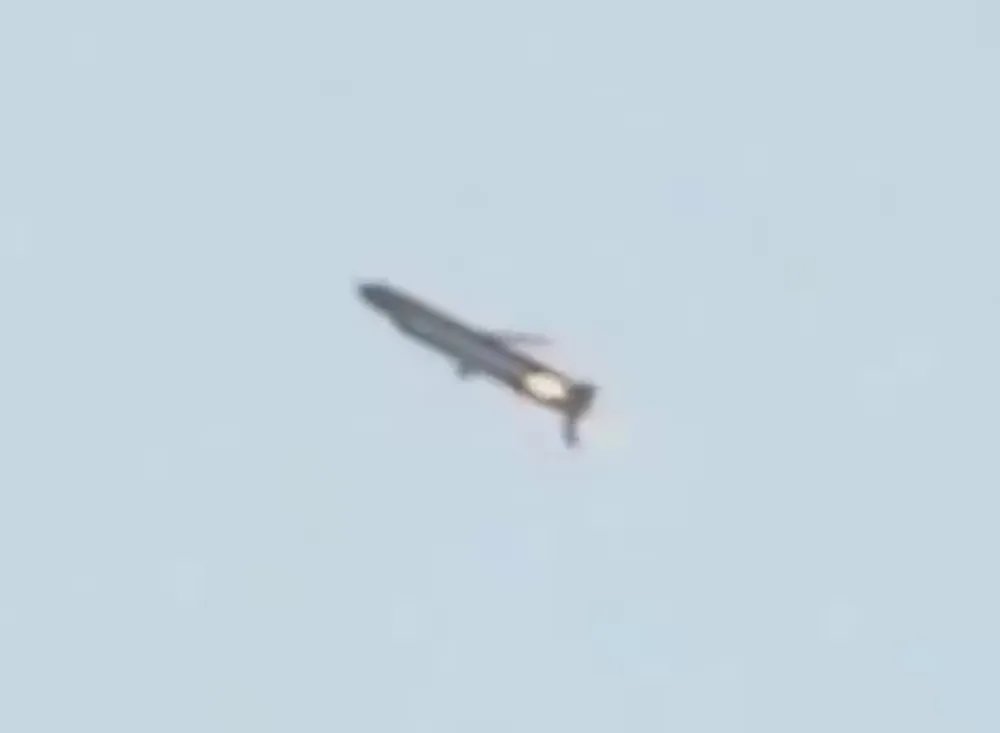
This approach differs fundamentally from most nuclear reactors, which use an indirect, closed-loop design. In those systems, a sealed coolant — typically water or another heat-transfer fluid — circulates through the reactor to carry heat away while keeping radioactive materials contained and minimizing radiation exposure.

While some kind of indirect loop design is not impossible, the researchers consider that it’s highly unlikely, due to the simple fact that these systems are considerably larger, heavier, and more complex and couldn’t be accommodated in what is by no means a huge missile.
This means that the Burevestnik is likely propelled using heated air that is drawn directly through the reactor core.
The resulting powerplant is simpler and more compact, but it comes with a serious drawback: “The direct cycle is very likely to result in a large quantity of radioactive material in the exhaust,” Hecla contends.
Essentially, as clean atmospheric air passes through the tiny tubes in the reactor, it gets irradiated and infused with fission decay products from the nuclear fuel.
The hot air that passes out of the end of the turbojet would be filled with radioactive isotopes of argon, krypton, and carbon, all of which would be scattered in its wake.
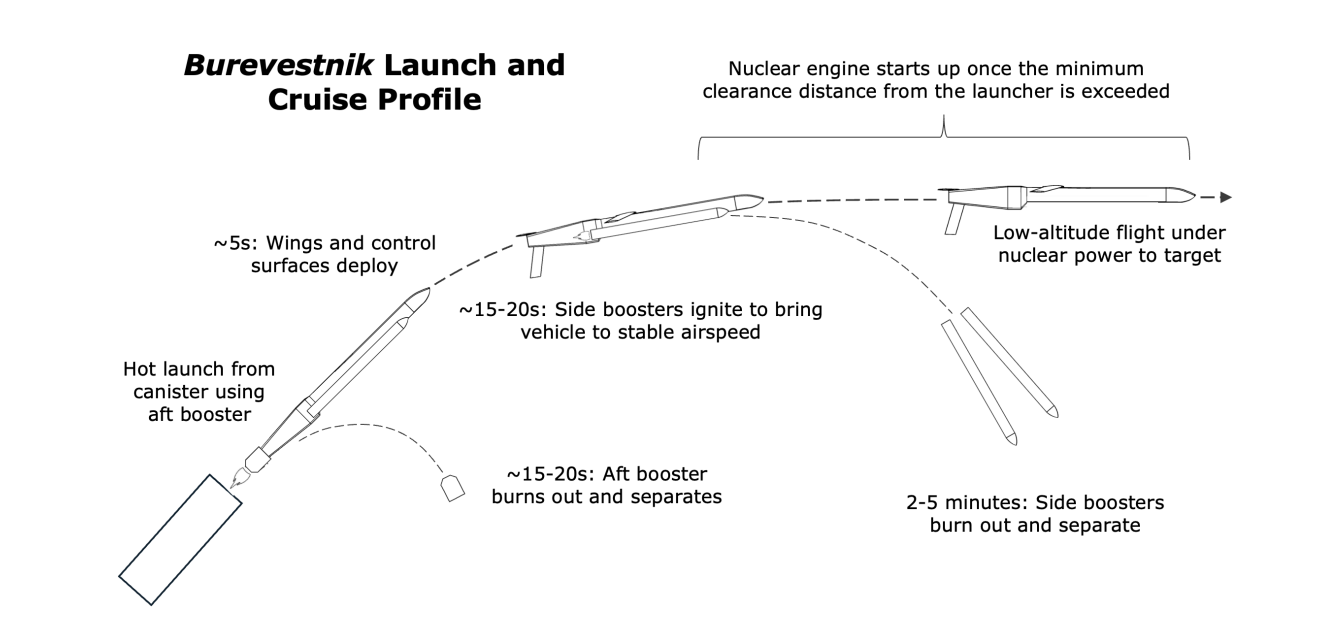
The longer the missile flies, the more of this harmful waste it would pump into the atmosphere, and onto the surface below.
The researchers highlight another problem, too.
Namely, any kind of prolonged flight is likely to result in corrosion of the reactor core, through a combination of heat and compressed air. This would create yet more radioactive particles.
Based on previous evidence, it seems that Russia might already be battling with the problems inherent in handling, loading, and testing a missile with this kind of propulsion system.
The Russian Ministry of Defense released the video below in 2018, saying that it showed an earlier Burevestnik test launch, as well as examples of the missiles themselves.

Крылатая ракета с ядерным двигателем «Буревестник»
The MIT researchers consider that the fatal 2019 explosion in the White Sea was likely a failed attempt to recover a prototype Burevestnik reactor. The reactor is presumed to have restarted as it was being raised from the seabed, leading to an explosion.
Bearing all this in mind raises the question of why Russia set about developing the Burevestnik, especially when it has so many other ‘novel’ weapons in the works or already fielded.
Ultimately, the major advantage of the Burevestnik is almost unlimited range, something that we have discussed in the past:
“The missile can be launched preemptively and approach its target from any vector long after launch. For example, it could be launched from the Arctic, stay aloft for many hours, and then attack the United States from the south. Once launched, its flight path is entirely unpredictable, and it could exploit holes in defenses and weaker spots in early warning capabilities. It provides another reason why space-based tracking layers, including those that can spot low-flying aircraft, arecurrently very much on trend.”
On the other hand, the Burevestnik doesn’t appear to be very fast or difficult to intercept once detected.
There is also its inherent inflexibility, since Russia has said it is only envisaged as being used with a nuclear warhead. While this could change, the size and weight of a conventional warhead would be more limited, and it’s questionable if Russia would risk employing such a complex missile to deliver a relatively modest conventional charge, especially since it would leave a potentially lethal radioactive footprint regardless.
“It leaks radiation, making it easy to track; it’s slow and un-stealthy, making it easy to shoot down; and the inside of the missile degrades during reactor operation, calling into question its ‘unlimited’ range,” William Alberque, a former director of strategy, technology and arms control at the International Institute for Strategic Studies (IISS), told TWZ.
“There are so many reasons everyone abandoned this concept in the Cold War,” Alberque added.
Hecla and Kemp assess that Russia’s reason for embarking on the Burevestnik is likely more to do with proving technologies for more ambitious and advanced programs further down the line. These could include nuclear-powered surveillance drones or space-based nuclear systems that would have considerably more military value.
Another possibility is that this is a ‘pet project’ of Putin himself, the Russian leader having been wooed by the idea of a missile with near-limitless range, regardless of the practical utility.
On the one hand, the latest analysis does suggest that the test last October means that the Burevestnik is the first aircraft ever built and flown in a sustained manner using nuclear power.
That is a landmark, but it’s one that’s tempered by very significant questions about the safety of anyone in its vicinity, and the environment at large, not to mention its somewhat limited military value.
Contact the author: thomas@thewarzone.com

