Шинэ технологийн тусламжтайгаар халим халим далайн гүнд хэрхэн хооллодог болон тэдний өмнө нь мэдэгдээгүй байсан 36 төрлийн зан үйлийг тодорхойлжээ.
“Marine Biology” сэтгүүлд нийтлэгдсэн судалгаагаар халим халимны далайн гүн дэх хооллох стратегийг нарийвчлан судалжээ. Судлаачид өндөр нарийвчлалтай камер болон хөдөлгөөн мэдрэгч бүхий төхөөрөмжийг халимны сэлгүүр дээр 24 цагийн турш байрлуулан, тэдний далайн гадаргуугаас доош гүйцэтгэх үйлдлүүдийг бичиж авсан байна. Энэхүү арга нь уламжлалт ажиглалтын хүрээнээс давж, далайн гүнд өрнөдөг нууцлаг зан үйлийг шууд баримтжуулах боломжийг олгожээ.
Баруун Австралийн Нингалу халимны хад орчимд хийсэн ажиглалтаар халим халим нь зөвхөн гадаргуу дээр бус, далайн 70 метр хүртэлх гүнд идэвхтэй хооллодог болох нь тогтоогджээ. Тэдний хооллох арга нь нөхцөл байдлаас хамааран өөрчлөгддөг бөгөөд зарим тохиолдолд ам ангайлган далайн ёроол руу удаан хөвөх, эсвэл гадаргуу дээрх крил хэмээх жижиг хавч хэлбэртнийг идэвхтэй хөөх зэрэг олон төрлийн стратегийг ашигладаг байна.
Судлаачид 100 гаруй өмнөх судалгааны мэдээлэлтэй нэгтгэн дүгнэхэд, халим халим нь бусад том шүүгч-тэжээлтнүүдээс илүү уян хатан хооллох дадалтай болох нь илэрчээ. Ихэнх тохиолдолд тэд эрчим хүч бага зарцуулах аргыг илүүд үздэг ч их хэмжээний хоол тэжээл бүхий бүс нутагт идэвхтэй хооллолтын горимд шилждэг байна.
Гэсэн хэдий ч энэхүү судалгаа нь зөвхөн нэг газрын залуу халимнуудыг хамруулсан тул зүйлийн хэмжээнд бүрэн дүүрэн төлөөлөл болж чадахгүй юм. Цаашид дэлхийн бусад хэсэгт энэхүү технологийг ашиглан ажиглалт хийх нь халим халимны далайн гүн дэх амьдралын хэв маягийг илүү өргөн хүрээнд таньж мэдэх боломж олгоно гэж эрдэмтэд үзэж байна.
Дэлгэрэнгүйг эх сурвалжаас харах
↓Эх сурвалжийг нээх ↓
Whale sharks are using a wider range of feeding techniques than scientists previously observed, according to new camera-based research. The study, published in Marine Biology, reveals hidden behaviors that were impossible to identify through traditional surface observations alone. The findings provide a clearer picture of how Rhincodon typus adapts its movements while searching for food in tropical waters.
For years, researchers have studied whale sharks through encounters at the ocean surface, where the animals often gather near coastlines. These observations have helped document their presence and behavior, but they only showed a small part of their lives.
When whale sharks dive deeper, scientists can follow their movements with electronic tags, but those devices do not show what the animals are actually doing. Understanding how these endangered filter feeders find food has become a major research focus because they live in environments where prey can be spread unevenly.
Cameras Reveal Hidden Whale Shark Behaviors
The research team used tags equipped with high-resolution cameras and movement sensors to record whale shark activity underwater. The devices were attached to the dorsal fins of sharks while researchers snorkeled alongside the animals. The cameras captured the front part of the sharks’ bodies and recorded their movements from a perspective close to the animals’ own view. After a programmed period of around 24 hours, the tags detached from the sharks, allowing researchers to recover the information without leaving equipment attached.
As the study, published in Marine Biology, explained this method made it possible to connect specific behaviors with movement patterns. Traditional tracking systems could reveal where a whale shark traveled or how deep it went, but they could not show whether it was feeding or how it interacted with prey.
The footage provided direct evidence of behaviors that had remained hidden beneath the surface. It allowed researchers to examine the actions of whale sharks during dives instead of relying only on observations made from boats or in shallow water.
How Whale Sharks Feed at Different Depths?
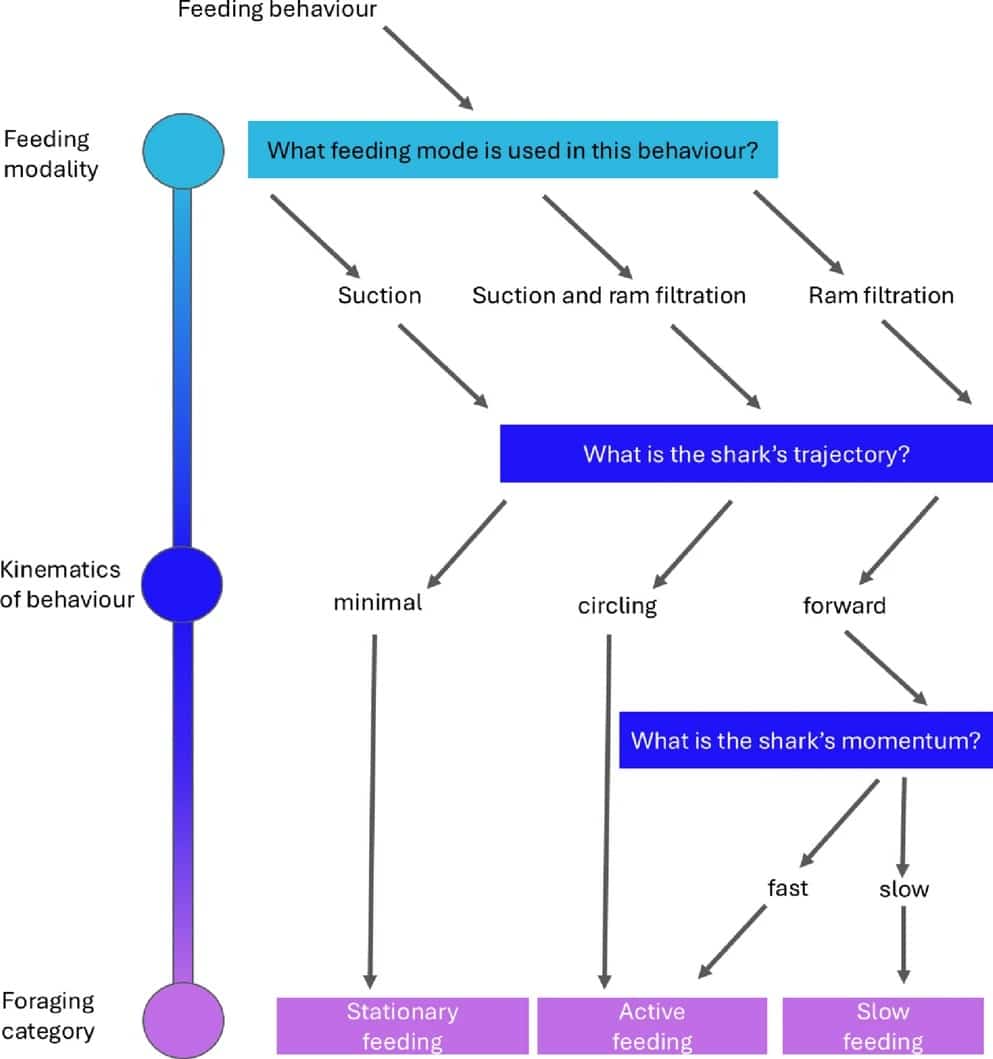
The researchers combined the camera footage with data from more than 100 scientific studies about whale shark behavior. This allowed them to build the largest catalog of whale shark behaviors so far, with 36 different behaviors identified.
The videos showed that whale sharks do not just feed near the surface. At the study site near Ningaloo Reef, Western Australia, they were seen feeding at depths of around 70 meters. Their techniques varied from slowly drifting toward the seafloor with their mouths open to actively chasing krill near the surface.

These observations challenge the previous idea that whale sharks are mainly surface feeders. Instead, the animals appear to adjust their feeding style depending on where they find food. Most of the time, the sharks used low-energy feeding methods. The researchers suggest that they often move through areas with fewer prey before switching to more active feeding when they encounter rich food sources, such as large krill swarms.
Whale Sharks Are More Adaptable Than Expected
The study also found that whale sharks use more feeding strategies than other large filter feeders, including basking sharks and whales. This variety may help them find food in tropical waters, where prey can be scattered and hard to find.
The research only looked at juvenile whale sharks from one gathering site, so the footage offers just a glimpse of how the species behaves. Researchers say putting cameras on whale sharks in other parts of the world could reveal even more about what they do underwater.
These cameras are opening a new window into the everyday lives of whale sharks. Scientists were once limited to watching them near the surface, but they can now follow what these giant fish are doing as they move through deeper waters.
Enjoyed this article? Subscribe to our free newsletter for engaging stories, exclusive content, and the latest news.


